Which French Level Is Right for You?
Not sure whether you're a beginner, intermediate or somewhere in between? Here's how to find the French class that suits your experience, confidence and goals.
You've decided to learn French, or perhaps you're ready to pick it up again. There's just one question: which class should you join?
Choosing your French level isn't always straightforward. Maybe you've studied French at school but haven't spoken it in years. Perhaps you understand quite a bit when listening but struggle to put a sentence together. Or you can hold a conversation but still find yourself searching for the right words.
The good news? You don't need to know everything to move forward. You just need to find the right starting point.
Let's look at the different French levels and what you can expect at each stage.
1. Foundation: Starting from the very beginning
You've always wanted to learn French but haven't really had the chance. Words like bonjour, merci and au revoir might sound familiar, but forming a sentence is still a challenge.
At Foundation level, you'll start with the essentials:
Getting familiar with French sounds and pronunciation.
Introducing yourself and exchanging basic greetings.
Learning everyday vocabulary and useful expressions.
Building simple sentences.
Developing confidence speaking French from the beginning.
You don't need any previous experience. This level is about getting comfortable with the language and discovering that speaking French can be enjoyable.
2. Beginner: Building your first conversations
You know a few French words and expressions, and perhaps you can introduce yourself or order a coffee. But having a longer conversation still feels difficult.
At Beginner level, you'll build on what you already know and start putting more words together.
You'll work on:
Talking about yourself, your family and everyday life.
Asking and answering simple questions.
Describing familiar situations.
Understanding and using common expressions.
Developing the confidence to participate in short conversations.
The aim is to move beyond memorising individual words and start using French to communicate.
3. Lower Intermediate: Moving beyond the basics
You can hold a conversation in French, especially about familiar subjects. You understand the general meaning of many discussions, but you sometimes struggle to find the right words or keep up when someone speaks naturally.
At Lower Intermediate level, you'll work on making your French more flexible.
You'll focus on:
Expressing opinions and explaining your ideas.
Talking about a wider range of everyday topics.
Using more varied sentence structures.
Understanding longer conversations.
Becoming more comfortable speaking without translating every sentence in your head.
The goal is to rely less on familiar phrases and become more independent when communicating.
4. Upper Intermediate: Speaking with greater ease
You can participate in conversations, discuss different subjects and understand most everyday French. You might even surprise yourself with how much you can say!
But speaking naturally, following fast conversations or expressing more nuanced ideas can still be challenging.
At Upper Intermediate level, you'll focus on:
Developing greater fluency and spontaneity.
Expressing more complex thoughts and opinions.
Improving your listening comprehension.
Expanding your vocabulary and everyday expressions.
Refining your ability to communicate in different social situations.
It's less about learning the basics and more about making your French sound and feel like your own.
5. Advanced: Refining your French
You can communicate comfortably in French and follow most conversations. You can discuss a range of subjects, express yourself with confidence and understand more complex language.
But there's always room to grow.
At Advanced level, you'll continue to:
Explore more nuanced expressions and vocabulary.
Discuss complex topics and current affairs.
Develop greater precision in your communication.
Understand different speaking styles and registers.
Refine your fluency and natural expression.
At this stage, learning becomes less about what you know and more about how naturally and confidently you use the language.
Still unsure which level is right for you?
Let's find out! Book a free French Level Assessment, and I'll personally guide you in understanding your current level and finding the class that best suits your learning journey.
What if you're somewhere between two levels?
That's completely normal.
Perhaps you've completed a few years of French lessons but haven't practised recently. Or you understand conversations quite well but freeze when it's your turn to speak.
Your French level isn't determined by how many years you've studied. It's about what you can currently understand, communicate and do with the language.
And remember, understanding French and speaking French aren't always the same thing.
You might know more French than you think. But how much can you actually use?
Knowing vocabulary and grammar is one thing. Putting them into practice in real conversations is another.
Take our French Reality Check Quiz to understand your French speaking style and discover how confidently you use French in everyday situations.
Take the French Reality Check Quiz
Find your place at Cosmopoli'French
At Cosmopoli'French, we believe learning French should feel like a natural part of life, not another classroom exercise.
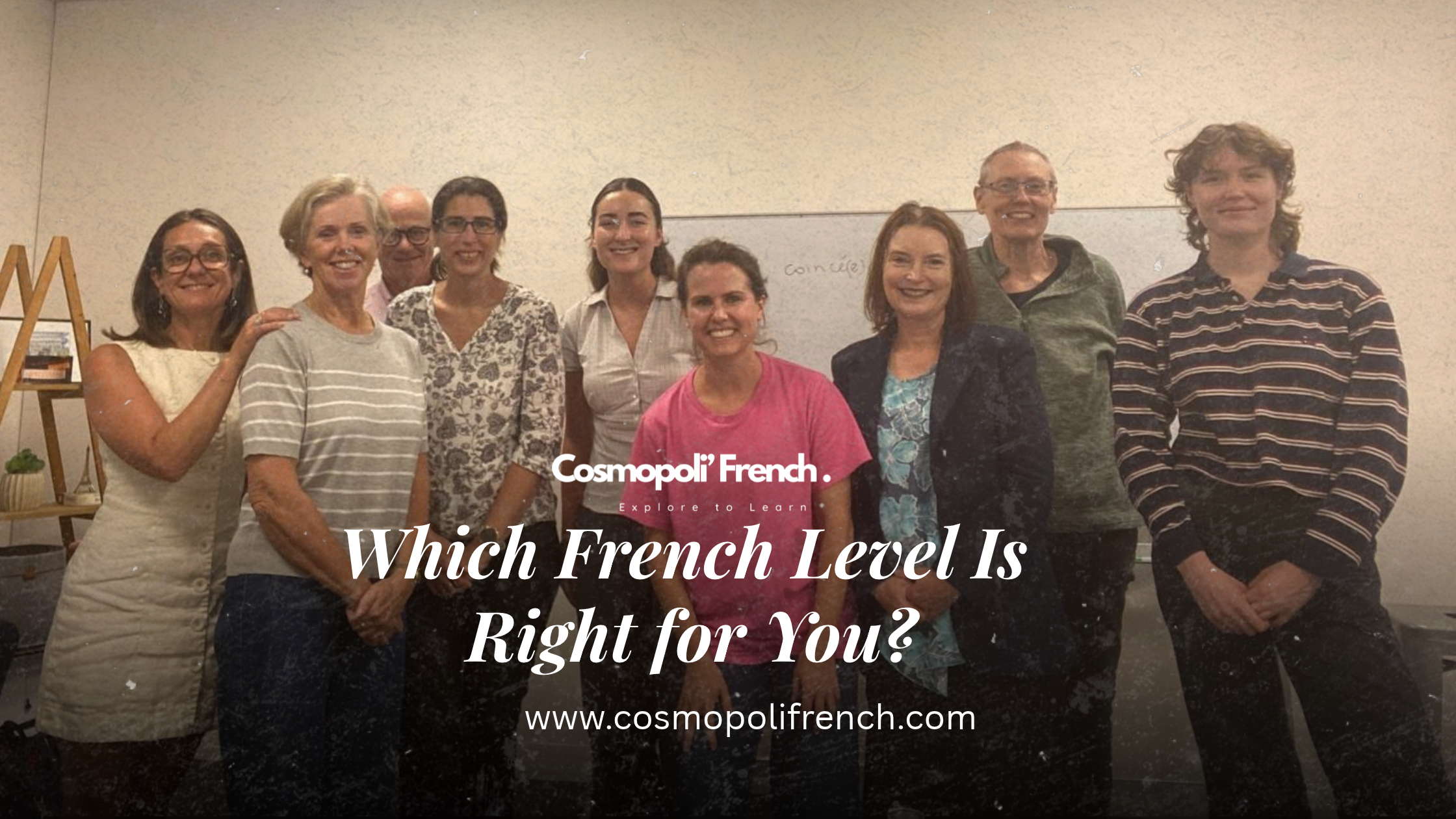
Our small-group classes bring people together to practise, exchange ideas and build confidence through real conversations. With a maximum of eight students per group, there's room for everyone to participate and grow.
Whether you're starting with your very first bonjour or looking to make your French more fluent, there's a place for you.
Not sure where to begin? Get in touch with us. We'd love to learn a little about your French experience and help you find the right group.